Upstream Controls, Downstream Payoff: Inside NAMPI 2026 with Program Integrity Leaders
Medicaid program integrity is moving upstream.
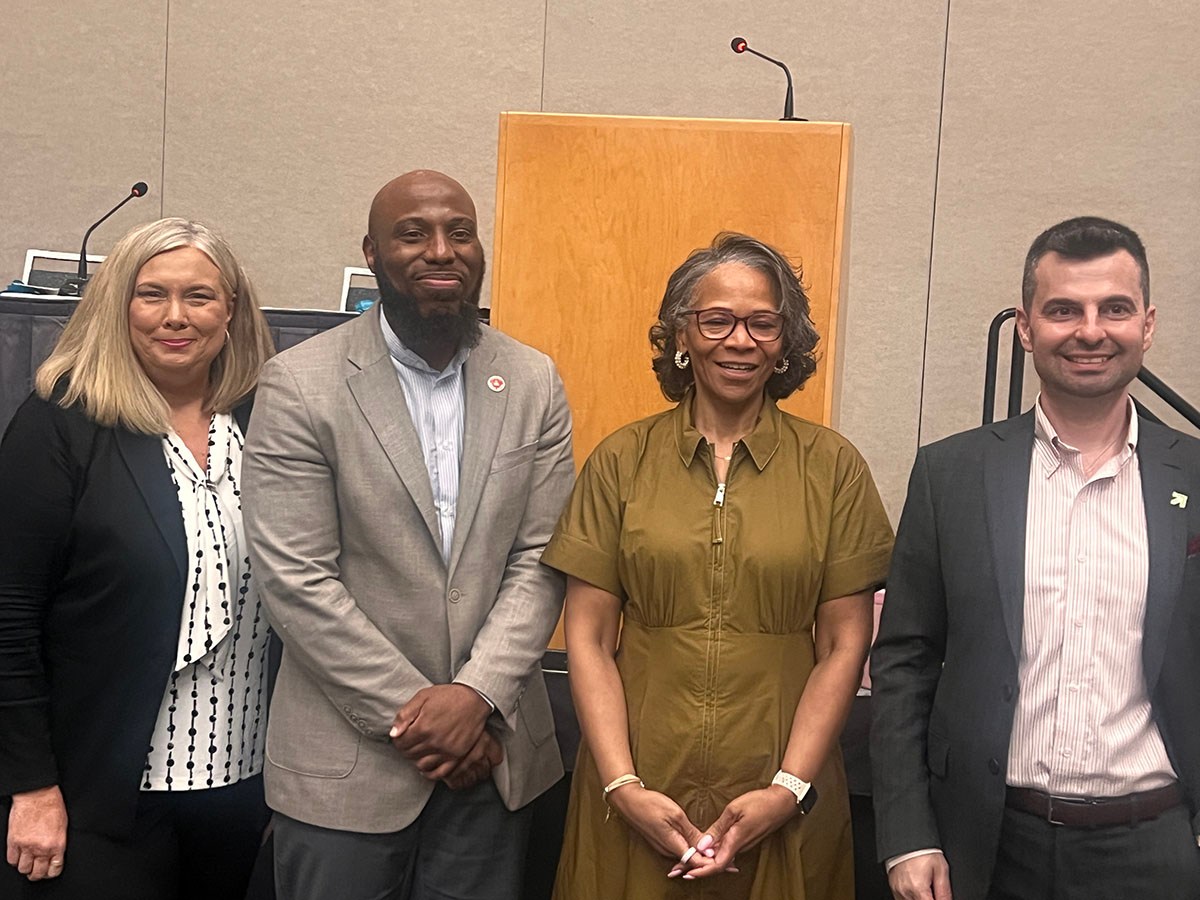
That shift came into sharp focus at NAMPI 2026 in Portland, where HMS and Gainwell presented to state, federal, clinical, product, and market leaders for Upstream Controls, Downstream Payoff: The Power of Prepayment Review. The session explored how Medicaid agencies can stop more improper payments before dollars leave the door while strengthening accuracy, supporting providers, and protecting access to care.
The panel’s message was clear: prepayment review is becoming a foundational component of a modern Medicaid strategy.
Prevention Is Becoming the New Standard
For years, Medicaid programs have relied on postpayment activities to identify and recover improper payments. The challenge is that once dollars leave the system, reclaiming them becomes more complex, more costly, more time-consuming, and overall recovery is very low.
Gary Call, MD, Chief Medical Officer at HMS, framed the discussion around a growing reality facing state agencies today. Financial pressures are increasing, scrutiny is intensifying, and Medicaid leaders are being asked to do more with fewer resources. At the same time, commercial health plans have already moved much of their program integrity activity upstream, giving providers a model they increasingly recognize and understand.
The panel agreed that prevention offers advantages that extend beyond financial recovery. It helps agencies identify issues closer to the point of billing, improve payment accuracy, and reduce the downstream effort associated with audits, appeals, collections, and provider disputes.
Turning Insight Into Action
One of the strongest themes to emerge during the discussion was that data alone does not create outcomes.
As Will O’Neill, Vice President of Product, FWA and Analytics at HMS, put it:
“Insights don’t deliver outcomes.”
The point resonated throughout the session. States have more data available than ever, yet many continue to struggle with converting information into meaningful action. Analytics can identify risk. The real challenge is building the workflows, processes, and operational discipline required to act on it.
O’Neill encouraged attendees to think beyond claims alone. Fraud, waste, and abuse risks emerge throughout the Medicaid ecosystem, from provider enrollment and member eligibility to prior authorization, payments, and claims processing. Agencies that connect these signals across the enterprise are better positioned to intervene before problems escalate.
That broader perspective reflects the combined strength of HMS and Gainwell. HMS brings decades of experience in payment integrity, clinical review, and fraud, waste, and abuse programs. Gainwell brings deep Medicaid expertise, operational scale, and technology leadership. Together, they help agencies connect intelligence with action across the Medicaid lifecycle.
Accuracy Matters More Than Volume
As attention around program integrity grows, Karen Shields, former CMS executive and CEO of K Shields Health Tech Consulting, challenged attendees to think carefully about what success really looks like.
Her message was timely:
“More findings do not automatically translate into better outcomes.”
Program integrity programs should focus on accuracy, accountability, and measurable impact. Agencies need confidence that they are identifying genuine fraud, waste, abuse, and error, rather than generating larger volumes of reviews and investigations.
Shields emphasized that strong programs balance prevention, postpayment recovery, and fraud investigations while continuously evaluating where vulnerabilities exist. She also stressed the importance of making program integrity part of broader organizational decision-making, ensuring that new services, systems, and policies are designed with integrity considerations from the start rather than retrofitted later.
The conversation reinforced a broader industry reality: technology is advancing rapidly, but sustainable results still depend on sound policy, experienced professionals, and operational discipline.
Provider Partnerships Are Essential
The panel spent significant time discussing provider engagement, an area that often determines whether prevention-focused initiatives succeed.
Prepayment review is most effective when providers understand what is expected, why a claim was selected, and how they can improve future submissions. Clear communication and meaningful education help providers correct issues earlier and reduce unnecessary friction.
The panelists also challenged agencies to view education differently. Training alone is not enough. Effective provider engagement requires ongoing communication, transparency, and a willingness to adapt based on provider feedback and evolving program needs.
That focus becomes even more important as Medicaid continues its shift toward managed care. States increasingly need visibility across multiple managed care organizations while maintaining consistent expectations, oversight, and accountability throughout the system. Several attendee questions focused specifically on how states can create common program integrity standards across diverse managed care environments while preserving flexibility for innovation and local needs.
Leadership Sets the Tone
Cindy Beane, Owner and CEO of Beane Medicaid & Health Solutions and former Commissioner of the West Virginia Bureau for Medical Services, emphasized that successful prevention strategies begin with leadership alignment.
“You have to have a plan that you can communicate from the top down.”
Her message was that program integrity cannot operate as an isolated function. Agency leaders, governors’ offices, legislatures, program teams, and provider-facing organizations all need a shared understanding of why prevention matters and how it supports the broader mission of Medicaid.
That alignment helps agencies navigate difficult conversations, manage stakeholder expectations, and maintain support for program integrity initiatives over time.
The Bigger Shift: Moving Medicaid Upstream
Throughout the discussion, Greg Fischer, Senior Vice President of FWA Markets at HMS, continually brought the conversation back to the larger transformation taking place across Medicaid.
For Fischer, prepayment review is not simply another program integrity tool. It reflects a fundamental shift in how agencies think about protecting taxpayer dollars and strengthening Medicaid performance.
As he noted:
“CMS has encouraged Medicaid programs to move fraud, waste, and abuse and error detection upstream, shifting from pay-and-chase activities to prevention-focused controls before claims are paid.”
That prevention-first mindset shaped the entire session. Rather than focusing primarily on recovering dollars after improper payments occur, agencies are increasingly looking for opportunities to stop problems before they happen.
Fischer’s perspective connected many of the themes discussed throughout the panel: stronger analytics, provider engagement, managed care oversight, clinical review, policy alignment, and organizational accountability. Taken together, they represent a more mature and proactive model for Medicaid program integrity.
Building the Foundation for What Comes Next
Looking ahead, the panel agreed that the next generation of program integrity will require agencies to strengthen their data foundations today.
O’Neill pointed to clean data models, stronger data engineering, and emerging AI capabilities as critical building blocks for the future. Agencies that invest now in data quality and workflow modernization will be better positioned to take advantage of increasingly sophisticated analytics and automation in the years ahead.
At the same time, panelists repeatedly emphasized that progress will depend on bringing together policy, clinical expertise, provider engagement, analytics, and leadership commitment to create a comprehensive prevention strategy.
As the session concluded, the conversation returned to a simple but powerful idea: prevention is easier, faster, and more impactful than recovery.
Dr. Call captured the provider side of that philosophy with a straightforward observation:
“Helping them do it right the first time.”
Together, the perspectives shared by Fischer, Dr. Call, O’Neill, Beane, and Shields point toward the same future: Medicaid agencies that combine prevention-focused strategies, stronger data foundations, provider partnership, and organizational accountability will be better positioned to protect program dollars, strengthen accountability, reduce burden, and improve experiences. HMS and Gainwell are proud to be part of that conversation and committed to helping states move confidently toward a prevention-first future.